
Make Sense Of The Mess
Help identify what's happening, what's urgent, what's connected and where it makes sense to start.
Practical support. Straight answers. Less being passed around like a parcel nobody ordered.
Help that actually helps.
This page explains the service we're developing, not support currently available. Veterans Backbone is not yet operational or accepting individual support cases.
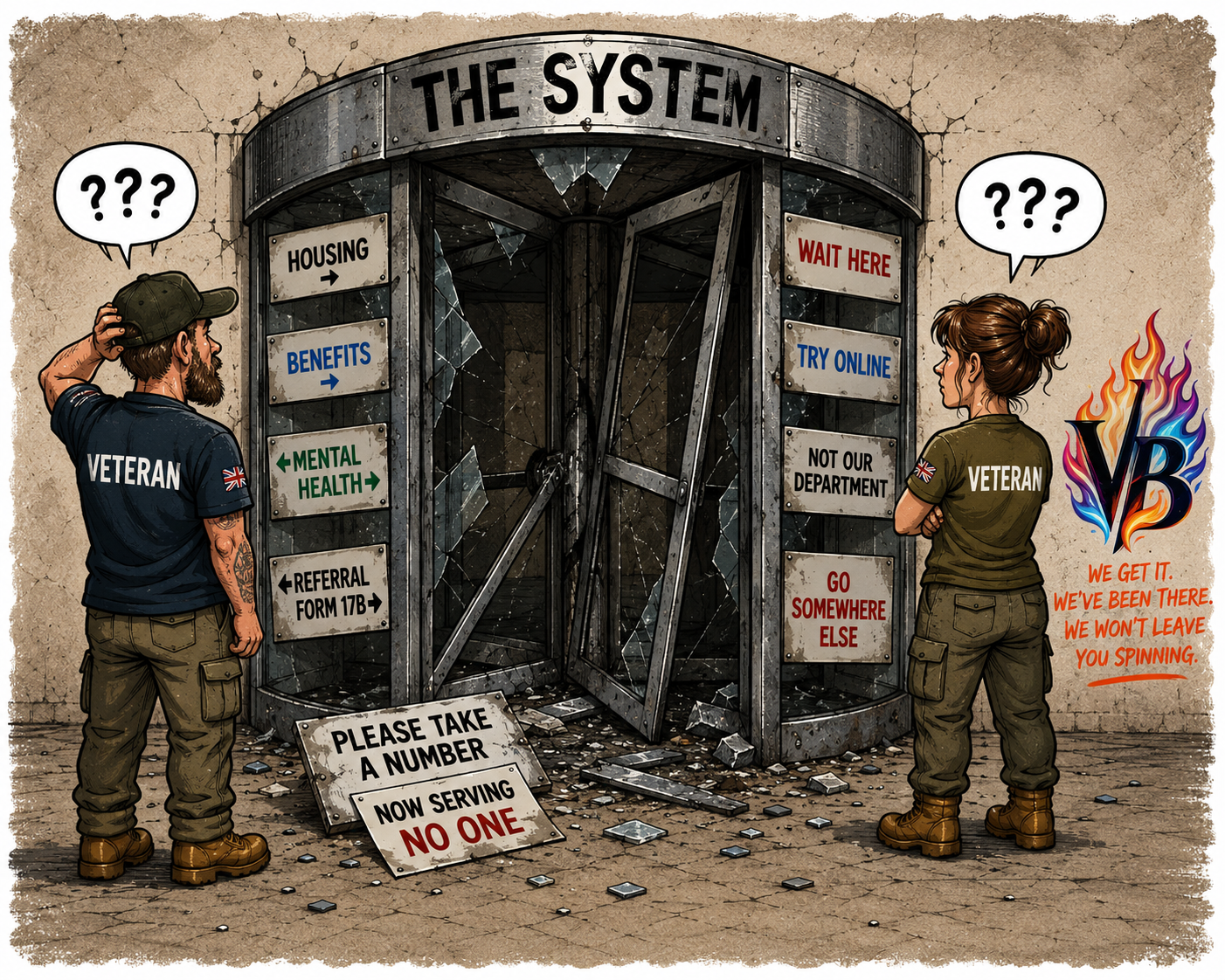
Sometimes there's one obvious problem. Sometimes there are twelve problems all fighting for first place.
Our future approach is designed to help untangle what's happening, understand what matters now, identify practical next steps and follow things through where appropriate.
Actual assistance would depend on eligibility, safeguarding, available resources and the agreed scope of support.
One thing at a time still counts.
These six areas describe our intended approach rather than an existing support service.
Help identify what's happening, what's urgent, what's connected and where it makes sense to start.
Turn a massive pile of problems into smaller, realistic steps that can actually be tackled.
Appropriate help when systems, organisations, decisions or processes are becoming part of the problem.
Our advocacy plans →Plans are considerably more useful when somebody remembers they exist. We want to follow up on agreed actions and recognise when progress stalls.
Where another organisation is better placed to help, we want to identify appropriate routes rather than make unrealistic promises.
Support isn't only forms and appointments. Community, conversation and finding ways back into everyday life matter too.
Meet the future RV Crew →
Being told to ring somebody else, who tells you to contact another department, who sends you back to the first one, is not joined-up support.
We've all seen what happens when systems lose sight of the person trying to get help.
The model we're developing aims to help keep different services connected, follow up appropriately and reduce the need for repeated explanations.
Same scars. Different battlefield.
Support should increase someone's control, not replace it.
Our intention is to help people understand options, work through problems and make informed decisions while respecting their rights and choices.
Decisions about a person's life remain theirs, subject to applicable safeguarding and legal duties.
You keep the steering wheel.
Good support works best when everybody involved takes part as far as they're reasonably able. That includes the service and the person receiving it.
These are proposed principles, not conditions currently being applied to anyone.
We can only work with the information available. Nobody should have to share everything immediately, but openness helps everyone understand the situation.
We'd aim to work with people, rather than take every decision or action on their behalf. Individual circumstances and barriers would matter.
When something changes, isn't working or suddenly goes spectacularly sideways, communication helps everyone reconsider the plan.
Nobody expects perfect progress. We'd encourage reasonable engagement with agreed steps while recognising that disability, trauma and other circumstances can affect what somebody can manage.
If a plan isn't useful, a suggestion makes no sense or we've misunderstood something, people should feel able to challenge it safely.
Bad days happen. Setbacks happen. Motivation occasionally leaves the building without notice. None of that automatically means support has failed.
Respect. Honesty. Clear communication. Appropriate boundaries. Safeguarding. Being treated like a human being.
Our future service must be accountable for its own conduct and decisions, not just expect accountability from veterans.
Accountability is a two-way street.
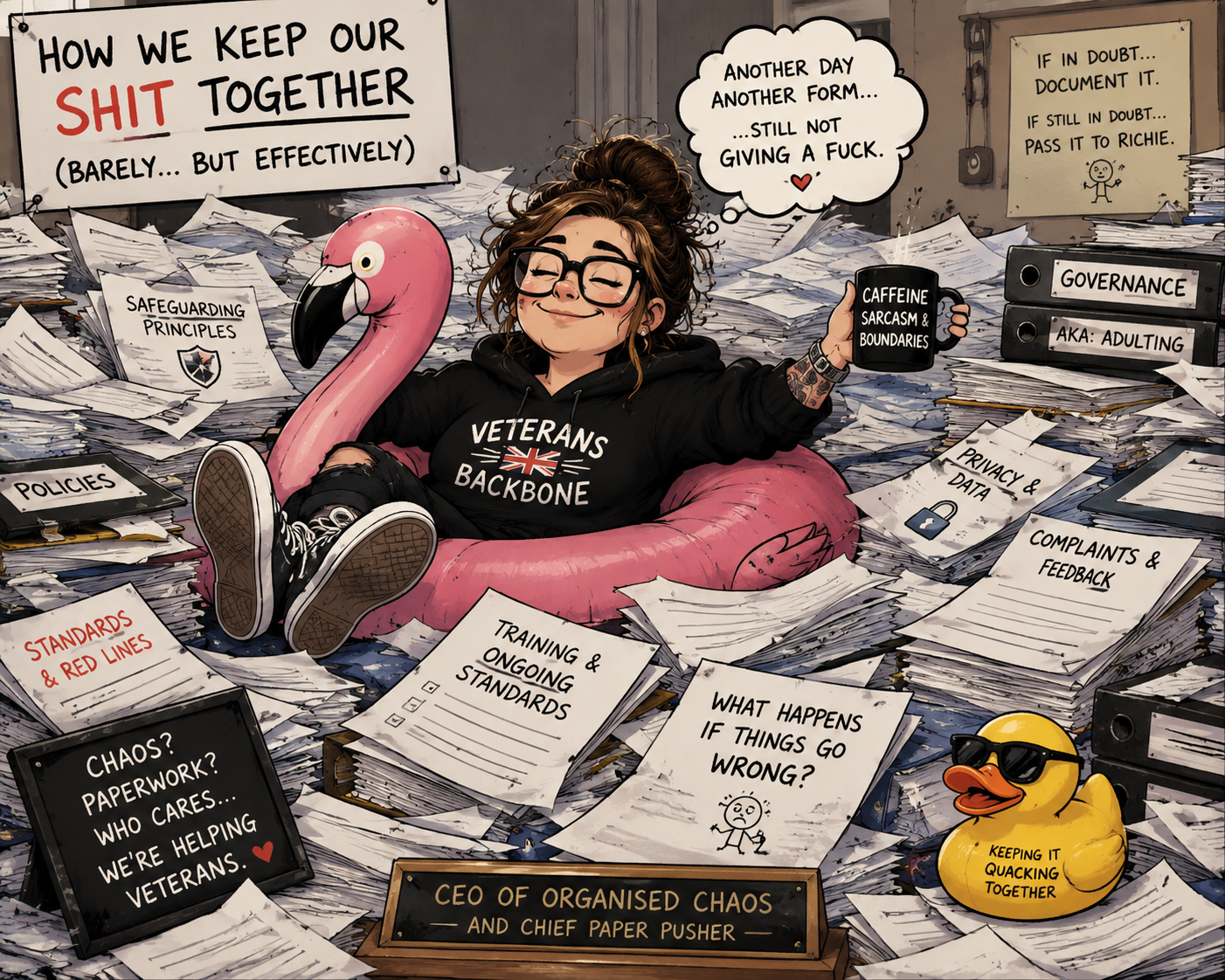
If everybody arrived organised, confident, motivated, financially stable, emotionally sorted and completely certain what to do next, there wouldn't be much point in building the service in the first place.
Progress can be slow. It can wobble. Sometimes it goes backwards before it goes forwards.
Effort matters. Perfection doesn't.
Surprisingly effective policy.
Staff, volunteers, other veterans, partners and everybody involved deserve respect.
Support needs boundaries to be safe, useful and sustainable for everyone.
Threatening, abusive or unsafe behaviour would require an appropriate response under the service's safeguarding, safety and conduct procedures.
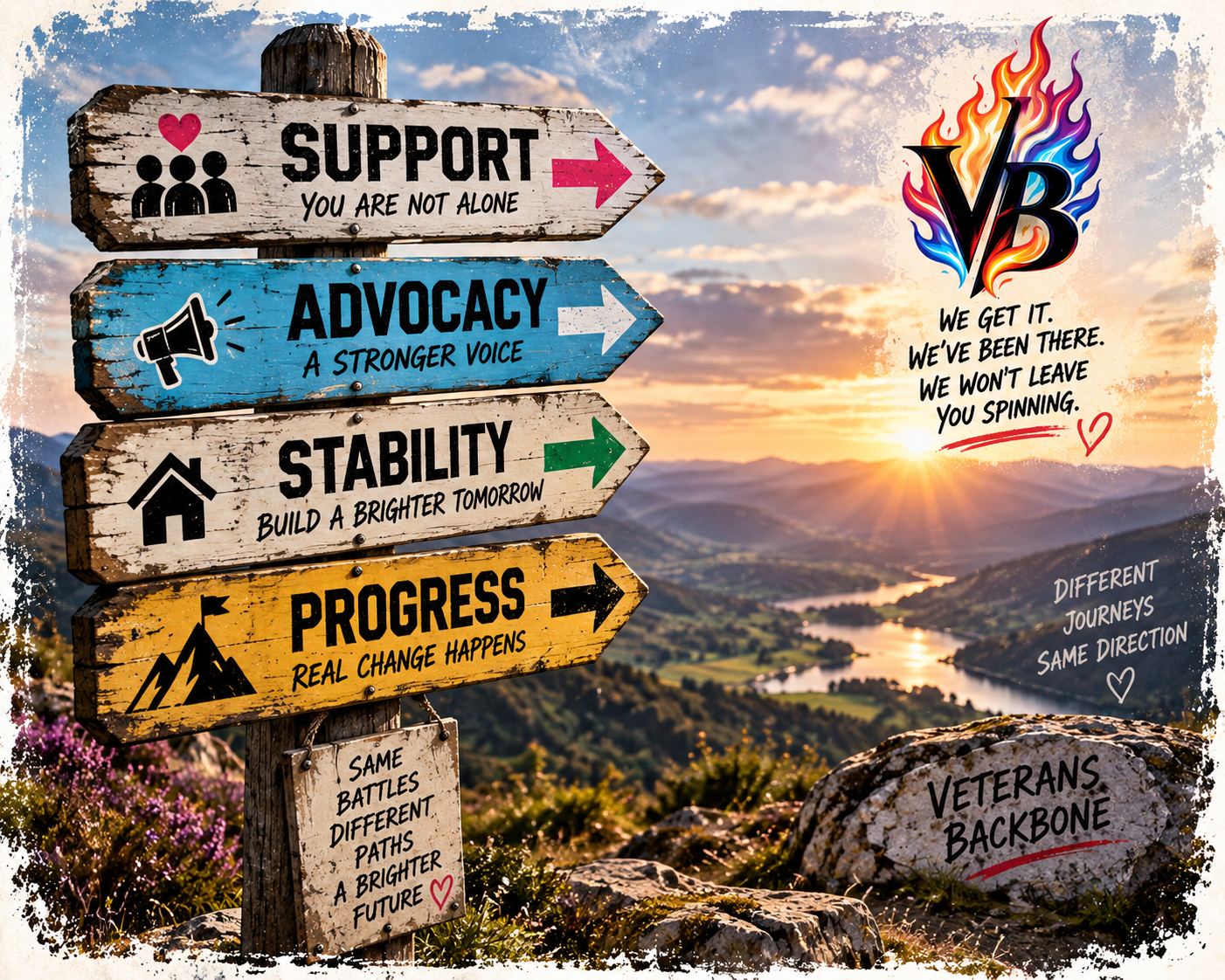
One person may benefit from practical help. Another may require advocacy. Someone else may need specialist support from an established organisation.
Longer-term community and rebuilding initiatives may offer other possibilities, once those are appropriately established.
The route follows the person.
We'd rather be useful than impressive.
If something falls outside what our future service can reasonably or safely provide, we'd aim to explain that honestly and identify other appropriate options where possible.
We won't claim expertise, authority or resources that the organisation doesn't have.
No organisation can do everything.
Explore the different routes we're planning, including community and specialist support.
Explore pathways →Our intended approach when systems and processes become part of the problem.
Explore advocacy →Because progress rarely behaves itself or travels in a straight line.
See the journey →We're still developing the service and aren't currently accepting individual cases or referrals.
You can read about our proposed referral process, or contact us with general questions about the project.